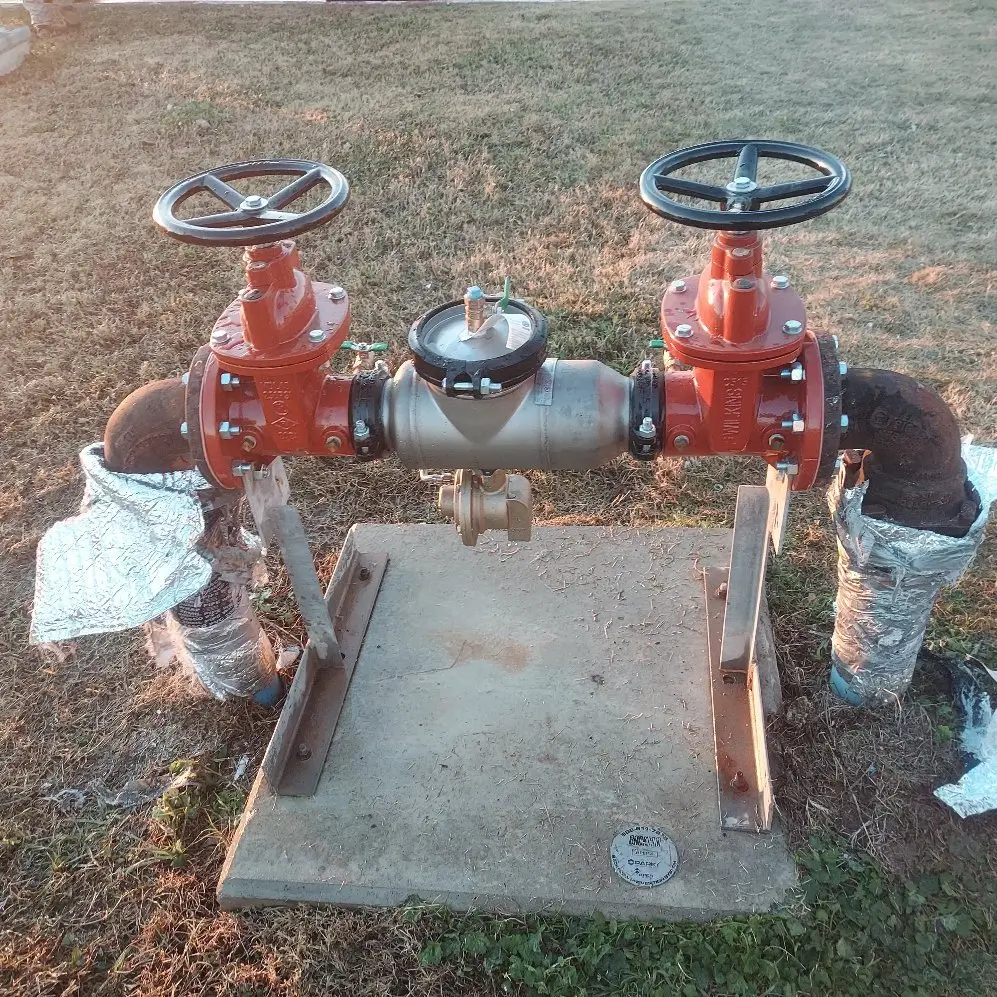
Backflow can threaten a commercial property’s clean water supply when contaminated water is allowed to move backward through the plumbing system. Our Houston backflow services help protect water quality, keep required devices working properly, and help businesses meet state and local compliance requirements.
Charlie’s Plumbing provides commercial backflow testing, certification, compliance reporting, repair, replacement, and installation throughout Houston and the surrounding area. We work with individual commercial properties as well as larger facilities with multiple backflow prevention assemblies.

Our certified technicians test the device, document the results, identify problems when an assembly fails, and help facility managers complete the required reporting process.
What Is Backflow—and Why It Matters
Backflow occurs when water flows in the wrong direction, allowing contaminants to enter the drinking water sBackflow is the reverse flow of water through a plumbing system.
Under normal conditions, water moves from the public water supply into your building. A sudden pressure change can cause water to move in the opposite direction. This can happen because of a water main break, high demand on the public water system, equipment inside a facility creating greater pressure, or other changes in water pressure.
When that happens, water from a contaminated source can be pulled or pushed back into piping that carries drinking water.
A properly installed and working backflow prevention assembly helps stop contaminated water from flowing backward into the potable water system.
Municipalities require annual inspections, testing, and certification, especially for commercial and inPotential contaminants in commercial facilities can include:
- Fertilizer and irrigation chemicals
- Grease and waste
- Cleaning chemicals
- Industrial fluids
- Bacteria
- Non-potable water
- Chemicals used in processing or equipment
- Water from boilers, cooling systems, or other mechanical equipment
For a commercial property, backflow can create health risks for employees, customers, tenants, patients, or visitors. It can also lead to failed inspections, compliance problems, water service interruptions, and possible fines.

Our Commercial Backflow Services
1 Annual Backflow Testing & Certification
Our licensed and certified technicians perform the full testing procedure required by municipalities, water districts, and utility authorities. We assess the performance of:
- Reduced Pressure Zone (RPZ) assemblies
- Double Check Valve (DC) assemblies
- Pressure Vacuum Breakers (PVB)
- Spill-resistant vacuum breakers
- All other approved commercial devices
Every test is performed according to state and municipal standards using calibrated equipment.
2 Backflow Repair & Rebuilding
If a device fails testing, we provide same-day or scheduled repairs:
- Internal component replacement
- Seal, spring, and check valve rebuilds
- Full assembly replacement
- Corrective piping adjustments
- Manufacturer-approved repairs for all major brands
We restore the device to full function and ensure it passes re-testing.
3 New Installation & System Upgrades
For facilities adding new equipment, expanding operations, or upgrading old assemblies, we handle:
- Proper device selection and sizing
- Code-compliant installation
- Integration with new or existing plumbing systems
- Installation of multiple backflow devices for large campuses
- Mapping and labeling for facility managers
4 Compliance Reporting & Documentation Management
This is where Charlie’s Plumbing provides exceptional value for commercial clients.
We don’t just test and certify—we also handle the entire compliance process, including:
- Completing all official test reports
- Filing documentation directly with the correct city, utility district, or water authority
- Maintaining records for your annual inspection schedule
- Sending reminders when your facility is due for retesting
- Coordinating with inspectors or facility managers as needed
We eliminate paperwork, ensure full compliance, and prevent costly missed deadlines.
Why Backflow Testing Is Critical for Commercial & Industrial Facilities
Commercial properties have far more complex plumbing demands than residential customers. Backflow prevention assemblies are often installed on:
- Domestic water services
- Fire sprinkler systems
- Irrigation lines
- Boilers and cooling systems
- Chemical feed or industrial equipment
- Commercial kitchens and food-service equipment
These systems present higher contamination risks and therefore face stricter municipal requirements.
Regular backflow testing ensures:
- Protection of potable water systems
- Compliance with local and state regulations
- Avoidance of fines, citations, and shutdowns
- Equipment safety and operational continuity
- Reduced liability and risk
Industries We Service
- Restaurants & food service
- Hospitals and medical facilities
- Office towers and commercial buildings
- Manufacturing plants
- Distribution centers and warehouses
- Schools and universities
- Multi-tenant retail centers
- Hotels and hospitality
- Industrial campuses
- Municipal and public facilities
If your property has a backflow preventer, we service it.
Texas and Local Backflow Testing Requirements
Backflow compliance is based on both Texas requirements and the rules of the public water system serving the property.
Under Texas Commission on Environmental Quality requirements, testable backflow prevention assemblies must be tested when installed by a licensed Backflow Prevention Assembly Tester. Assemblies installed to protect against health hazards must also be tested and certified at least annually.
The applicable Texas requirements include Title 30 of the Texas Administrative Code, Section 290.44(h).
Testing must be performed using properly calibrated testing equipment, and a test report must document the results for the responsible public water system.
Local water providers may have additional requirements for:
- Testing frequency
- Approved device types
- Tester registration
- Reporting forms
- Electronic filing
- Repair and retesting deadlines
- New installations
- Replacement assemblies
- Fire protection systems
- Irrigation systems
- High-hazard facilities
This is why the compliance requirement for one Houston-area property may differ from another property served by a different municipality, utility district, or water authority.
Charlie’s Plumbing identifies the applicable requirements for the property and handles the testing and reporting process accordingly.
Our Backflow Testing Process

- Step 1: Schedule & On-Site Assessment
Our certified technician arrives onsite, identifies the device or devices, and performs a quick system review.
- Step 2: Full Backflow Test
Using calibrated test kits, we conduct:
- Relief valve checks
- Check valve testing
- Air gap verification
- Pressure and sealing integrity checks
Each step meets local code and manufacturer requirements.
- Step 3: Immediate Results & Recommendations
We provide same-day results.
If repairs are needed, we notify you and proceed only with approval.
- Step 4: Certification & Documentation
Once testing is complete, we prepare all required certification paperwork.
- Step 5: Compliance Filing
We file everything with the appropriate water authority or municipality on your behalf—accurately and on time.
- Step 6: Annual Reminders
We track your compliance schedule and remind you before the next certification is due to avoid lapses.
Advantages of Working With Charlie’s Plumbing
- Certified backflow testers
- Deep commercial and industrial expertise
- Testing, certification, repair, installation—all in one place
- Full compliance management and filing
- Emergency service available
- Documentation you can rely on during inspections
- Proven track record with complex and large facilities
- Trusted by major brands, campuses, and commercial operators
Our team ensures your facility stays fully protected and compliant year-round.
Preventative Maintenance Programs for Backflow Devices
Many commercial facilities choose to include backflow devices in their preventative maintenance plans, which may also cover:
- Annual testing
- Routine cleaning and component checks
- Valve exercising
- Line inspections
- System performance reviews
- Repair tracking and documentation
Preventative maintenance helps avoid emergency failures, improves reliability, and ensures you’re always inspection-ready.
Schedule Backflow Testing, Certification & Compliance Filing
If your facility is due for annual testing—or experiencing issues with a backflow device—Charlie’s Plumbing is ready to help.
Contact us today to schedule testing, request a quote, or get on a recurring compliance schedule.
Other SERVICES
Commercial Plumbing Service That Keeps You Running
Charlie’s Plumbing specializes in service, maintenance, and emergency response for commercial and industrial facilities. Our work is focused on keeping buildings operational, safe, and compliant with minimal disruption.
We support facilities that need a plumber they can trust, not one they have to manage.

Emergency Services
Offering 24/7 emergency response with real people, rapid dispatch, no downtime.

Scheduled Services
After-hours, overnight, weekend service scheduled to avoid disrupting your operations.

Project Work
Comprehensive commercial retrofits, repipes, drainage, boilers expertly with minimal disruption.

PM Agreements
Preventative maintenance programs reduce downtime, extend equipment life, ensure operations.

Compliance
We adapt to your processes, ensuring compliance, portals, documentation, worry-free.

Planning and Solutions
Strategic plumbing partner planning, maintenance, risk reduction, long-term reliability.