Multifamily and Apartment Properties Hydrojetting Services
Hydrojetting for multifamily and apartment properties cleans grease, sludge, scale, roots, and other qualifying buildup from shared drain and sewer lines.
A sewer backup at an apartment community can affect more than one resident. Wastewater may rise into a first-floor tub while residents in the units above continue using sinks, showers, toilets, and washing machines. A building drain may overflow. Several units may report slow drainage at the same time.
The maintenance team may clear the nearest fixture and restore temporary flow. Then the same building calls again.
And again.
When a multifamily sewer line develops recurring blockages, the problem may involve buildup across a longer section of shared piping. Hydrojetting can remove more material from suitable sewer lines than a basic cable used only to open a path through a stoppage.
Charlie’s Plumbing provides emergency and scheduled hydrojetting for apartment and multifamily properties throughout Houston and the surrounding area. We identify the affected section, clean suitable piping, inspect the line when needed, and explain whether damaged sewer piping or another system problem needs additional work.

Apartment Sewer Backups Affect Residents and Property Operations
A sewer backup creates an immediate plumbing problem, but the effects can spread through property operations.
The management and maintenance teams may need to:
- Stop plumbing use in affected units
- Notify residents
- Enter occupied apartments
- Protect common areas
- Arrange specialty cleanup
- Move residents from affected spaces
- Answer calls from several buildings
- Update regional management or ownership
- Determine whether the problem is inside a unit or in shared piping
- Document the plumbing condition
- Plan a permanent repair
- Coordinate follow-up access
A backup in one apartment may begin in a sewer line used by several units. Residents above the affected unit may not know there is a problem and may continue sending wastewater into the blocked line.
The property’s response needs to identify which units are connected and ask residents to stop using affected fixtures when necessary.
Charlie’s Plumbing works with the approved property contact to determine where the backup is appearing and which section of the system may be involved.
Recurring Apartment Clogs May Point to a Shared Sewer Problem
An isolated toilet clog does not automatically mean the property needs hydrojetting.
The pattern matters.
A shared sewer problem may be more likely when:
- Several units report slow drains
- Lower-floor units experience backups
- Wastewater rises in tubs or showers
- Multiple fixtures in one apartment are affected
- Units on the same plumbing stack report problems
- An exterior cleanout overflows
- The same building sewer needs repeated cable service
- Backups return soon after the line is cleared
- Grease or roots are found during previous service
- A camera inspection shows heavy buildup
- Problems occur during higher-use periods
- A lift station alarm accompanies slow drainage
These conditions may involve grease, sludge, roots, scale, or other removable material. They may also involve a broken pipe, improper slope, a collapsed line, or a lift station failure.
Charlie’s Plumbing evaluates the affected system before recommending hydrojetting.
Why Apartment Sewer Lines Develop Heavy Buildup
A multifamily sewer system receives wastewater from many households.
Residents may send the following into shared drainage lines:
- Cooking grease
- Oil
- Food residue
- Soap
- Hair
- Paper products
- Wipes
- Hygiene products
- Laundry residue
- Other materials that do not break down easily
Even when most residents follow proper drain practices, the line still carries a combined volume of wastewater from many kitchens, bathrooms, and laundry connections.
Grease may cool and attach to the pipe wall. Other material can collect around it. Roots may enter through cracks or separated joints. Scale may reduce the opening in older piping.
As the inside of the pipe becomes restricted, the line may handle normal use for part of the day but back up when several residents use water at once.
Hydrojetting Cleans More of the Available Pipe Opening
Mechanical cable equipment can be useful for opening a blocked sewer. A cutting or clearing attachment moves through the stoppage and creates a path for wastewater.
That may be exactly what is needed during an active backup.
However, a cable may leave grease, sludge, and other buildup attached to the pipe wall. If the remaining opening is narrow, the line may collect more material and clog again.
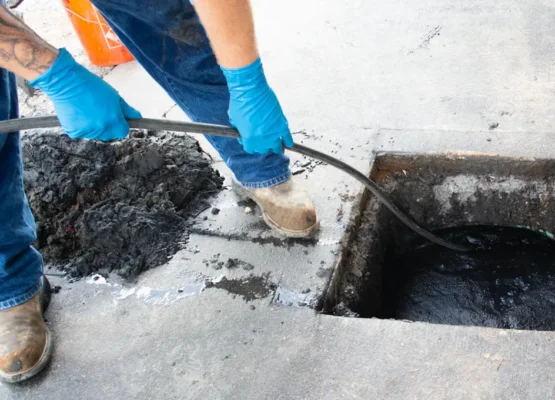
Hydrojetting sends controlled high-pressure water through a specialized hose and nozzle. It may:
- Remove grease from the pipe wall
- Break apart sludge
- Flush sediment
- Remove loose scale
- Cut light roots with suitable equipment
- Clean a longer section of qualifying piping
- Move loosened material through the system
The pressure, water flow, hose, and nozzle should be selected for the specific pipe. Older or damaged piping may require a more cautious approach or a different service.
How Charlie’s Plumbing Approaches a Multifamily Sewer Problem
Apartment properties need more than a plumber who clears one fixture and leaves without identifying the affected system.
Our process begins with the service history and pattern of resident complaints.
We Ask Which Units and Buildings Are Affected
We may ask:
- Which units are reporting problems?
- Are they on the same floor or plumbing stack?
- Are lower-floor units affected first?
- Is an exterior cleanout overflowing?
- When did the problem begin?
- Has this line backed up before?
- What did previous technicians remove?
- Is camera footage available?
- Does the property have a private sewer map?
- Is there a lift station?
- Are several buildings affected?
- Can maintenance provide access to occupied units?
The answers help us determine whether the problem appears local or shared.
We Locate the Correct Access Point
Hydrojetting may be performed through:
- Exterior cleanouts
- Mainline cleanouts
- Manholes
- Plumbing stack access
- Other approved openings
A cleanout may be behind landscaping, fencing, stored materials, or parked vehicles. The property may need to clear the area before our equipment arrives.
We Evaluate the Pipe
Before hydrojetting, we consider:
- Pipe material
- Pipe diameter
- Approximate age
- Previous repairs
- Root history
- Known low sections
- Available cleanouts
- Line length
- Blockage type
- Camera findings
- Where loosened material will travel
We do not knowingly apply aggressive hydrojetting to piping that cannot support it.
We Clean and Test the Line
When the pipe is suitable, we clean the authorized section in controlled passes.
Afterward, we may run water through available fixtures or another access point to observe whether the line accepts flow. This test does not recreate every condition produced when an occupied building uses plumbing at peak demand, but it provides useful information about the cleaned section.
We Explain What We Found
We document the work and report whether we observed:
- Grease
- Sludge
- Roots
- Scale
- Debris
- Standing water
- Damaged piping
- Inaccessible sections
- A need for additional camera inspection
- A possible lift station problem
- A recommended repair
- A line that may need scheduled maintenance
The property receives information it can use to decide what should happen next.
Sewer Camera Inspection Can Reveal What the Buildup Was Hiding
A sewer camera can help us evaluate the accessible interior of a multifamily sewer.
Before cleaning, camera inspection may show:
- Heavy grease
- Roots
- Sludge
- Standing water
- Broken piping
- Separated joints
- Corrosion
- Pipe offsets
- Debris
- Changes in pipe material
Sometimes buildup or wastewater blocks the camera’s view. The line may need to be opened and cleaned before we can see the pipe wall.
After hydrojetting, another camera pass may show whether the cleaned line contains:
- Cracks
- Root entry points
- Low sections
- Improper connections
- Severe corrosion
- Remaining buildup
- A partial collapse
- Previous repair areas
A camera does not show the outside of the pipe or every possible leak. It helps us determine whether the visible interior supports continued cleaning or points toward repair.
Charlie’s Plumbing provides video line and leak locating for commercial properties.
Grease Buildup Is Not Limited to Restaurant Sewers
Apartment kitchens can send a steady amount of grease and food residue into shared waste lines.
One resident may pour cooking oil into the sink. Another may wash grease from pans without scraping them first. Across dozens or hundreds of units, small amounts can combine inside the sewer.
Possible signs of grease buildup include:
- Recurring kitchen stack backups
- Lower units affected before upper units
- Grease removed during cable service
- Similar complaints after meal periods
- Thick buildup shown by a sewer camera
- A line that improves after cleaning but slows again
Hydrojetting may remove qualifying grease from the line. The property can also remind residents not to pour fats, oils, or grease into sinks.
Resident notices cannot guarantee what enters the drain, but they can set clearer expectations for proper disposal.
Root Removal Does Not Repair the Sewer Pipe
Roots may enter an apartment sewer through a crack, separated joint, damaged cleanout, or another opening.
Hydrojetting with an appropriate nozzle may remove light roots and loose root material. Mechanical root-cutting equipment may also be used.
Removing the roots restores available flow, but it does not close the opening in the pipe.
If roots return, the property may need:
- Camera inspection
- Line locating
- Sectional sewer repair
- Excavation
- Under-slab repair
- Tunneling
- Partial sewer replacement
- Full sewer replacement
Charlie’s Plumbing explains the visible condition and available plumbing options. The property can then plan the repair based on location, cost, access, and urgency.
We Check Whether a Lift Station Is Part of the Problem
Some apartment communities use lift stations to move wastewater when gravity cannot carry it to the final sewer connection.
A lift station problem may look like a sewer blockage. The property may experience:
- Slow drainage across several buildings
- High-water alarms
- Wastewater backups
- Pumps running continuously
- A rising basin level
- Overflow near the station
If the pump, float, control, valve, or discharge line has failed, hydrojetting the upstream gravity sewer may not correct the problem.
Charlie’s Plumbing evaluates whether the restriction appears to be in the sewer line, lift station, or force main before recommending service.
Emergency Hydrojetting for Apartment Sewer Backups
Charlie’s Plumbing provides 24/7 emergency commercial plumbing service for multifamily properties.
During an active backup, the first goal is to stabilize the situation and restore drainage when the system allows it.
Emergency service may include:
- Identifying the affected units and line
- Asking residents to stop connected fixture use
- Opening the blockage
- Cable drain cleaning
- Hydrojetting
- Camera inspection
- Lift station evaluation
- Locating damaged piping
- Documenting the plumbing condition
The plumbing response does not include every service required after wastewater enters an occupied unit. The property may also need specialty cleaning, drying, restoration, environmental evaluation, or resident support.
We explain the plumbing work completed and whether restrictions remain.
Scheduled Hydrojetting Gives the Property More Control
A known problem line does not always need to wait for another emergency.
Scheduled hydrojetting may be appropriate when:
- The same building sewer repeatedly backs up
- Maintenance records show grease or sludge
- Roots have been found
- Camera footage shows buildup
- A cable clears the line but the improvement does not last
- The property wants to service a line before a known high-use period
- Several communities need coordinated maintenance
Planned work gives the property time to:
- Notify residents
- Arrange unit access
- Clear cleanouts
- Move parked vehicles
- Restrict fixture use
- Schedule maintenance staff
- Coordinate cleanup
- Approve additional camera inspection
- Review previous service records
Qualifying work can be scheduled at night, on weekends, or during another planned service window.
Maintenance Contracts for Repeat Problem Lines
Not every sewer on an apartment property needs hydrojetting at the same interval.
A commercial plumbing maintenance plan may focus on:
- A kitchen waste stack with recurring grease
- A private sewer affected by roots
- A building drain with repeated sludge
- A lift station and its connected lines
- A lower building that receives flow from several structures
- A sewer with documented seasonal problems
The service interval should reflect actual conditions, including:
- Number of connected units
- Pipe material
- Pipe condition
- Previous blockages
- Camera findings
- Grease buildup
- Root intrusion
- Results of earlier cleaning
- Lift station operation
Charlie’s Plumbing creates commercial plumbing maintenance contracts for individual apartment communities and multifamily portfolios.
Hydrojetting for Multifamily Management Companies
Multifamily management companies may need plumbing support across several communities.
Charlie’s Plumbing can establish procedures for approved properties, including:
- Property and regional contacts
- Emergency escalation
- Approval limits
- Purchase orders
- Work-order procedures
- Billing instructions
- Facility management portals
- Required photographs
- Service documentation
- Resident access coordination
- Maintenance schedules
The administrative process may be standardized, but each property should still receive a plumbing plan based on its own system.
Two apartment communities may have similar unit counts but very different pipe materials, sewer layouts, lift stations, and service histories.
What It Is Like to Work With Charlie’s Plumbing
Multifamily property teams need a commercial plumber who understands occupied buildings and shared plumbing systems.
When you work with Charlie’s Plumbing, you can expect us to:
- Gather information before dispatch
- Coordinate with the approved property contact
- Review which units and buildings are affected
- Follow property access procedures
- Evaluate whether hydrojetting is appropriate
- Use commercial drain-cleaning equipment
- Explain what we find
- Document the line serviced
- Report visible pipe damage
- Recommend follow-up work when needed
- Provide emergency and scheduled service
- Work with approved portals and work-order procedures
Our goal is to help the property understand whether it experienced a one-time blockage, recurring buildup, or a sewer condition that needs a permanent repair.
Frequently Asked Questions About Multifamily Hydrojetting
Can Charlie’s Plumbing hydrojet an apartment sewer main?
Yes. We hydrojet suitable shared drains, building sewers, private sewer mains, and other qualifying multifamily lines when appropriate access is available.
Will residents need to stop using their plumbing?
Residents connected to the affected sewer may need to stop using fixtures temporarily. The property manager handles official resident notices using the service information we provide.
Can hydrojetting remove apartment sewer roots?
Hydrojetting may remove light roots and loose root material. Root entry indicates an opening in the pipe that may require repair.
Can old apartment sewer lines be hydrojetted?
Possibly. We consider the pipe material, condition, age, access, and previous damage before selecting a cleaning method.
Why does the same apartment sewer keep backing up?
Repeat backups may involve grease, roots, sludge, scale, pipe damage, improper slope, a lift station problem, or a line that was only partially cleared.
Can hydrojetting repair a broken sewer?
No. Hydrojetting cleans suitable piping. Broken, collapsed, separated, or improperly sloped sewer lines require repair or replacement.
Does Charlie’s Plumbing provide emergency apartment sewer service?
Yes. We provide 24/7 emergency commercial plumbing service for qualifying multifamily drain and sewer problems.
Can hydrojetting be scheduled as preventive maintenance?
Yes. We can schedule qualifying problem lines based on service history, camera findings, buildup, and pipe condition.
Call Charlie’s Plumbing for Multifamily Hydrojetting
A shared apartment sewer that repeatedly backs up can create resident complaints, emergency work orders, property damage, and repeated service costs.
Charlie’s Plumbing provides emergency and scheduled hydrojetting, sewer camera inspection, drain cleaning, lift station service, and sewer repair for multifamily properties throughout Greater Houston.
We identify the affected line, clean suitable piping, document what we find, and explain whether the property should consider additional maintenance or repair.
Call 713-242-7543 or contact Charlie’s Plumbing to request multifamily sewer service.
If the same building sewer keeps backing up, does it need another temporary opening or a more complete cleaning and inspection?