Commercial plumbing for Houston grocery stores and shopping centers can become far more complicated when the same sewer backup keeps returning in one tenant space.
A restroom backs up. A floor drain overflows. A tenant smells sewer gas near the back of the building.
A plumber clears the line, the water starts moving again, and everyone assumes the problem is fixed.
Then it happens again.
Recurring plumbing problems in grocery stores and shopping centers are rarely just an inconvenience. They can interrupt food preparation, close customer restrooms, create sanitation concerns, damage tenant spaces, and lead to arguments about who is responsible for the repair.
The main problem may not even be located inside the tenant space where the backup appears.
The Location of the Backup May Not Be the Source
When wastewater comes up through a floor drain or toilet, it is natural to focus on that fixture. The affected drain may be the lowest opening in the system, not the place where the blockage began.
Several tenants may connect to the same branch line or main sewer line. Waste entering the system farther upstream can build up until the line loses enough capacity to handle normal flow.
The first visible backup may appear inside:
- A grocery store restroom
- A restaurant kitchen
- A salon
- A retail tenant’s breakroom
- A shared public restroom
- A utility area behind the building
- A vacant tenant space
The tenant experiencing the overflow may not be the tenant contributing the most material to the blockage.
This is why repeatedly clearing one fixture may provide only temporary relief.

Grocery Stores Place Heavy Demands on Drainage Systems
A grocery store is not one simple retail operation. It may include several departments, each placing different demands on the plumbing system.
A full-service grocery store may have:
- A deli
- A bakery
- A meat department
- A seafood department
- Produce preparation areas
- Coffee or beverage service
- Public restrooms
- Employee restrooms
- Floor sinks
- Mop sinks
- Food preparation sinks
- Refrigerated display cases with drainage
- Grease-handling equipment
- Floor drains in cleaning and storage areas
Water, grease, food particles, cleaning chemicals, paper products, and other materials can enter the drainage system throughout the day.
Even when employees follow proper procedures, high volume can expose problems inside older, damaged, undersized, or poorly sloped piping.
A line that handles normal weekday traffic may struggle during busy weekends, holidays, or periods of heavy food preparation.
That usage pattern matters.
One Tenant Can Affect Several Businesses
Shopping centers often contain a mix of businesses with very different plumbing habits.
A restaurant may send grease and food waste into its drainage system. A salon may deal with hair and product buildup. A grocery store may have heavy floor-drain and food-service use. An office tenant may use little water beyond restrooms and a breakroom.
Those tenants may still share part of the same underground sewer system.
When a shared line begins losing capacity, the symptoms may move around the center. One week, a grocery store floor drain backs up. Later, a nearby restaurant experiences slow drainage. A vacant suite may develop sewer odors.
Treating each complaint as a separate problem can lead to repeated service calls without solving the larger issue.
Property managers should look for patterns across the entire center, not only inside the space reporting the latest problem.
Why Another Drain Clearing May Not Solve It
Clearing a stoppage restores flow. It does not always explain why the stoppage happened.
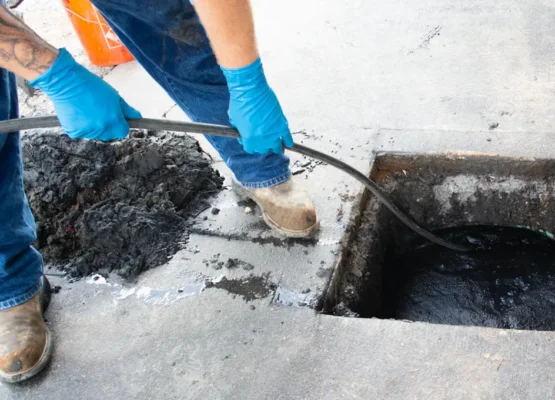
A cable may create a temporary opening through a buildup without cleaning the full inside diameter of the pipe. Grease, sludge, scale, or debris may remain attached to the pipe walls.
The line works again, but its capacity is still limited.
The backup may also be caused by something that basic drain clearing cannot correct, including:
- A damaged or separated pipe
- A low section holding water and debris
- Root intrusion
- Heavy grease buildup
- Scale inside older piping
- A collapsed section
- Poor slope
- An undersized line
- A failed connection between pipe materials
- A foreign object lodged in the system
- A problem farther downstream from the affected tenant
A recurring stoppage is a sign that the property may need a broader commercial sewer evaluation.
Service History Can Help Find the Real Problem
One of the most useful tools in diagnosing a recurring backup is the property’s own service history.
Before the next plumbing visit, the property manager should gather information about previous incidents.
Helpful details include:
- Which tenant reported the problem
- Which fixture backed up first
- The date and time of the incident
- Which other tenants were operating at the time
- Recent food-service or cleaning activity
- Whether the problem happened during heavy rain
- What work was performed during the last visit
- How long the repair lasted
- Which cleanout was used
- Whether a camera inspection was completed
- Whether grease, wipes, roots, or damaged piping were found
- Which tenants share the affected line
Even a basic timeline may reveal a pattern.
For example, backups that happen during lunch service may point to a different problem than backups that appear after overnight cleaning. Problems that affect several suites may indicate a shared line. An issue that returns after every major rain event may require an evaluation of site drainage, damaged piping, or outside water entering the system.
Details help.
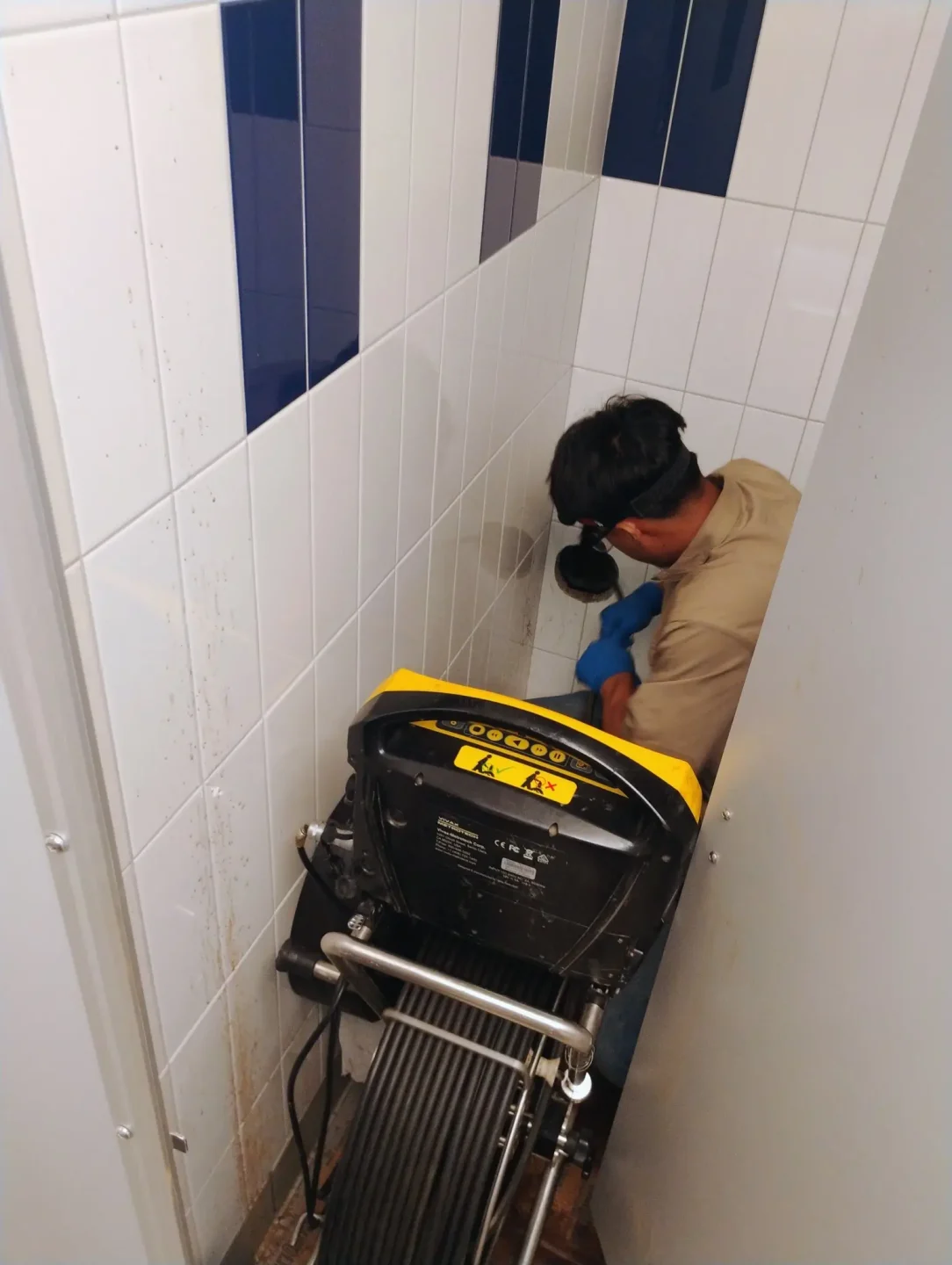
A Full Evaluation Should Follow the Plumbing System
A proper evaluation begins with understanding how wastewater moves through the property.
The plumber may need to identify:
- Which fixtures connect to each branch line
- Where tenant lines join the building sewer
- Which businesses share underground piping
- Where cleanouts are located
- Where the line leaves the building
- How the center connects to the public sewer
- Whether grease traps or interceptors are involved
- Whether past additions changed the original system
Older shopping centers may have been expanded, divided, or remodeled several times. A space that began as a retail shop may later become a restaurant, grocery department, salon, or other water-intensive operation.
The current tenant mix may place a much greater demand on the plumbing system than the original design anticipated.
Diagnostic Tools Help Separate Symptoms From Causes
Commercial sewer diagnosis may require more than one method.
Depending on the problem, the work may include:
Video camera inspection
A sewer camera can help identify damaged piping, heavy buildup, standing water, roots, separated joints, and other visible conditions.
The line may need to be cleaned before the camera can provide a useful view.
Commercial hydrojetting
Hydrojetting uses high-pressure water and specialized nozzles to remove grease, sludge, scale, and buildup from the inside of the pipe.
The correct pressure, nozzle, and method depend on the pipe material and condition.
Sewer line locating
Line-locating equipment helps identify the path and depth of underground piping. This can be especially valuable when property drawings are missing or outdated.
Smoke testing
Smoke testing may help trace sewer odors, open connections, failed seals, and other places where sewer gas can enter occupied spaces.
Flow and fixture evaluation
The plumbing team may need to observe how several fixtures drain at the same time. A line that appears clear with one sink running may struggle when several departments discharge water together.
No single test answers every question. The right process depends on the history and symptoms at the property.
Houston Retail Properties Can Have Added Complications
Many Houston shopping centers have been operating for decades. Tenant spaces may have changed use several times, while parts of the original underground plumbing remain in place.
Soil movement can place stress on buried lines. Heavy rain can expose drainage problems or contribute to ground conditions around outside piping. Remodeling projects may add fixtures without providing a full picture of the existing system.
Some properties also lack complete plumbing drawings.
That does not mean the cause cannot be found. It means the plumber may need to build an accurate picture through field investigation, line locating, camera work, and service history.
Property Managers Need to Coordinate the Investigation
Recurring plumbing problems often involve several parties.
The property manager may need to coordinate access with:
- The grocery store manager
- Restaurant tenants
- Other affected businesses
- Grease trap service companies
- Cleaning crews
- Security personnel
- The property owner
- The plumbing company
- Contractors working in vacant suites
Access matters because the plumbing system may need to be evaluated in more than one tenant space.
Lease documents may help define maintenance responsibilities, but responsibility should not be assumed before the source and location of the problem are understood.
The priority is to identify the system failure and stop the repeated disruption.
When to Move Beyond Another Temporary Repair
A full plumbing evaluation should be considered when:
- The same drain has backed up more than once
- Several tenants report slow drainage
- Sewer odors move between tenant spaces
- The line needs frequent clearing
- Backups occur during predictable operating periods
- Grease or heavy buildup repeatedly returns
- A camera cannot pass through part of the line
- The property has a history of underground repairs
- The affected piping serves a grocery store, restaurant, or other high-use tenant
- Temporary repairs are becoming a regular operating expense
At that point, the question is no longer how to clear the next stoppage.
The question is why the system keeps failing.
Preventive Maintenance Should Match the Property
A shopping center with restaurants, grocery operations, salons, and high customer traffic may need more frequent maintenance than a center made up mainly of office and low-water-use tenants.
The maintenance plan may include:
- Scheduled sewer cleaning
- Hydrojetting of grease-prone lines
- Camera inspections of repeat problem areas
- Grease interceptor coordination
- Floor drain inspections
- Cleanout identification and access planning
- Review of tenant plumbing changes
- Documentation of recurring service locations
- Planning for damaged or aging underground lines
A useful maintenance plan is based on the property’s real usage, not a generic schedule.

How Charlie’s Plumbing Helps Grocery Stores and Shopping Centers
Charlie’s Plumbing works with grocery stores, retail centers, property managers, facility teams, and commercial tenants throughout the Houston area.
Our commercial plumbing team can help investigate recurring backups, clear sewer stoppages, clean lines, locate underground piping, inspect sewer conditions, and plan permanent repairs when damaged piping is found.
We also understand that a shopping center plumbing problem often requires communication with several businesses. Our team works with the designated property contact to coordinate access, explain findings, and document the work completed.
The goal is not simply to get water moving for another few days.
It is to help the property understand why the problem keeps returning and what can be done about it.
Stop Treating the Same Backup as a New Problem
A recurring plumbing backup is rarely new. It is usually an unresolved condition showing up again.
The earlier a property manager begins tracking the pattern, affected tenants, service history, and system layout, the easier it becomes to make a better repair decision.
Charlie’s Plumbing provides commercial sewer and drain service for grocery stores, shopping centers, and other active facilities across the Houston area.
When an issue comes up, call Charlie’s. We handle it.
Call for service at 713-242-7543.
How many more temporary drain clearings will the property pay for before finding the real cause?