A sewer smell in a commercial building is hard to ignore.
Employees notice it. Tenants complain about it. Customers may assume the building is dirty. In restaurants, medical facilities, retail stores, offices, and other public-facing properties, an odor problem can quickly become a management problem.
The frustrating part is that sewer odors do not always come from an obvious backup.
The drains may appear to be working.
The toilets may flush normally.
There may be no wastewater on the floor.
Yet somewhere in the building, that smell keeps coming back.
When that happens, covering it with air freshener or repeatedly cleaning the restroom usually does not solve anything. The goal is to figure out how sewer gas is getting into the building and correct the plumbing condition allowing it to happen.

Start With the Location of the Odor
The first question we want answered is simple.
Where is the smell strongest?
A sewer odor near one floor drain is different from an odor that seems to move between several rooms.
Property managers should pay attention to details such as:
- Which room or area smells
- Whether the odor is stronger near a drain
- What time of day it happens
- Whether it appears after heavy restroom use
- Whether it gets worse when another fixture is used
- Whether the smell is limited to one tenant space
- Whether it appears on more than one floor
- Whether it started after remodeling or construction
- Whether the area has plumbing fixtures that are rarely used
Those details give a commercial plumber a much better place to start.
An employee saying, “It smells bad around 3:00 every afternoon near the back restroom,” is more useful than simply reporting that the building smells like sewer gas.
An Unused Drain Can Cause a Very Noticeable Problem
Commercial buildings often have plumbing fixtures that do not get used every day.
Think about a floor drain in a storage room.
A restroom in a vacant tenant suite.
A mop sink that has not been used in months.
A drain in an old kitchen or breakroom.
Many drains rely on water inside the trap to block sewer gases from entering the building.
If that water disappears, the drain can provide a path for sewer odor to enter the room.
This is one of the simpler conditions to check before moving into more involved plumbing work. Charlie’s follows that same approach when investigating commercial sewer odors, ruling out common causes before moving to smoke testing or more advanced diagnosis.
Sometimes the Drain Is Working but the Seal Is Not
Water in a trap is only useful if it stays where it belongs.
A plumbing system depends on more than a pipe carrying wastewater away.
The drainage and vent system works together.
Problems with venting, damaged fittings, failed seals, or other plumbing components can allow sewer gas into an occupied space even when the drain itself does not appear clogged.
This is where property managers can get frustrated.
Someone pours water down the drain.
The smell improves.
Then it comes back.
At that point, commercial drain cleaning may or may not be the answer.
The problem needs to be diagnosed rather than assumed.
A Dirty Drain and a Sewer Gas Problem Are Not Always the Same Thing
Not every bad drain smell is sewer gas.
Commercial drains can collect material that creates its own odor.
Food debris, grease, soap residue, organic material, and buildup inside a drain can create unpleasant smells even when the plumbing system itself is sealed correctly.
This is especially common in facilities with kitchens, food preparation areas, floor drains, mop sinks, and other heavily used drainage points.
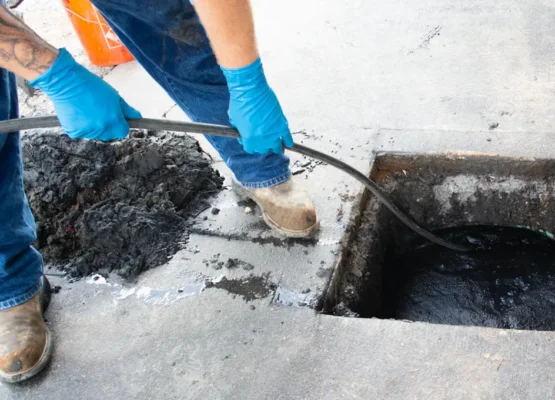
In those situations, commercial drain cleaning may be part of the solution.
The key is knowing what is actually causing the smell.
Cleaning a drain will not repair a cracked pipe.
Smoke testing will not be the first step for a drain that simply needs cleaning.
Good commercial plumbing service starts by separating one problem from the other.
Pay Attention When the Smell Changes With Building Use
Timing can reveal a lot.
Suppose an office smells fine early in the morning.
By mid-afternoon, the sewer odor appears.
Then it fades again overnight.
Why?
Something in the building may be changing during those hours.
More restrooms are being used.
More water is moving through the drainage system.
A restaurant tenant may begin food preparation.
A mechanical system may turn on.
Doors or ventilation systems may change air pressure inside the building.
That does not tell us exactly what is wrong, but it gives us information.
Commercial buildings are dynamic environments. Plumbing, ventilation, tenant activity, and building pressure can all change throughout the day.
That is why documenting when an odor appears can help more than repeatedly calling maintenance to spray deodorizer.
Vacant Tenant Spaces Deserve Attention
Vacant spaces can create plumbing problems that show up somewhere else.
A retail suite may sit empty for six months.
The restroom is never used.
The breakroom sink is dry.
Nobody is regularly checking floor drains.
Then the tenant next door begins reporting a sewer smell.
Management naturally focuses on the occupied suite because that is where the complaint came from.
But the source could be nearby.
Property managers with vacant commercial spaces should include plumbing fixtures and drains in routine property checks, especially when a suite will remain unused for an extended period.
A vacant suite is still connected to the building.
Its plumbing does not disappear just because the tenant did.
Remodeling Can Introduce New Questions
Commercial buildings change over time.
Walls move.
Tenant spaces are combined.
Restaurants become retail stores.
Office suites become medical spaces.
Old fixtures are removed.
New fixtures are installed.
Plumbing lines may be rerouted or abandoned as part of those changes.
Years later, a property manager may have very little information about what is behind the walls.
If sewer odor begins after a renovation, or in an area that has been remodeled several times, the history of that space matters.
An improperly sealed abandoned connection or a problem with the drain and vent system can create an odor that is difficult to find by simply looking at the visible fixtures.
This is one situation where a commercial plumbing company may need to investigate beyond what can be seen from inside the room.
What if Nobody Can Find Where the Smell Is Coming From?
This is where things get interesting.
The restroom has been checked.
The floor drains have water.
The obvious fixtures appear fine.
The area has been cleaned.
The odor is still there.
Now the goal is to find an opening in the plumbing system that may not be visible.
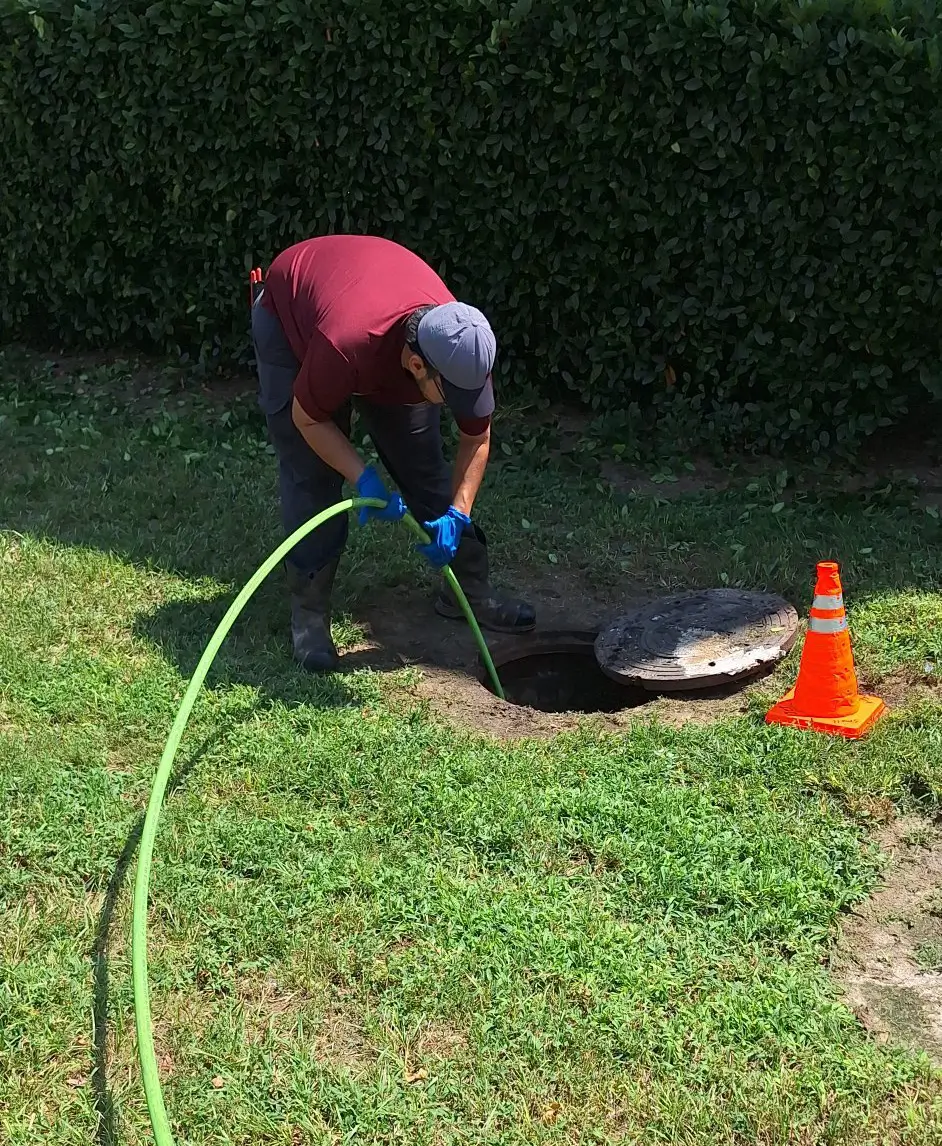
Charlie’s Plumbing uses smoke testing as a diagnostic tool after more common causes of sewer odors have been ruled out. The process introduces controlled smoke into an isolated section of the drain and vent system so technicians can see where it escapes.
If smoke appears somewhere it should not, that gives the plumber a much better idea of where sewer gas may also be escaping.
That could lead to a damaged pipe, failed fitting, vent problem, open connection, defective trap seal, or another plumbing condition that needs repair.
Why Not Start With Smoke Testing?
Because sometimes the problem is simple.
If a floor drain has dried out, there is no reason to turn the building into a plumbing investigation.
The same applies to a dirty drain or an obvious fixture problem.
We want to work from the most likely and accessible causes toward the problems that require more advanced testing.
That approach can save the property owner time and avoid unnecessary disruption.
A commercial plumber should be trying to solve the problem, not simply use every tool on the truck.
Sewer Odors Can Become a Tenant Relationship Problem
Property managers see another side of this issue that plumbers sometimes do not.
The tenant does not care that locating the odor source is difficult.
They care that their office smells.
A restaurant owner may worry about customers noticing it.
A retailer may have employees complaining.
A medical office may be concerned about how the building feels to patients.
An office tenant may submit repeated maintenance requests because the problem keeps returning.
That puts the property manager in the middle.
This is why simply telling the tenant that “the drain was cleaned” does not help much if the smell returns two days later.
You need to know what was checked, what was found, and what the next step is if the problem continues.
Do Not Assume Every Sewer Smell Needs Commercial Drain Cleaning
Commercial drain cleaning is an important service, but it should be used when the drain condition calls for it.
If buildup inside a line is contributing to the odor or restricting drainage, cleaning the line may help correct the problem.
If the odor is entering through a dry trap, damaged vent, failed seal, open pipe, or cracked fitting, drain cleaning alone will not repair that condition.
That distinction matters when searching for commercial drain cleaning in Houston.
The goal should not be to find someone willing to run a machine through a pipe.
The goal should be to find a commercial plumbing company that can determine why the building smells and recommend the service that fits the problem.
Commercial Properties Need Commercial Diagnosis
A sewer odor in a house may involve a handful of fixtures.
A large commercial property can have dozens or hundreds.
There may be multiple floors, tenant spaces, mechanical rooms, commercial kitchens, floor drains, janitorial areas, and plumbing lines hidden above ceilings or below slabs.
That is why the experience of the plumbing company matters.
Charlie’s Plumbing works specifically with commercial and industrial properties in the Houston area. Our services include commercial drain cleaning, sewer service, plumbing repair, leak detection, smoke testing, and other diagnostic and repair work for active commercial facilities.
We understand that finding the source is only part of the job.
The work also has to be completed around employees, customers, tenants, facility staff, and normal building operations.
What Should You Tell the Plumber When You Call?
The more information we have, the better.
Before calling, try to answer a few questions:
Where is the odor strongest?
When did it begin?
Does it happen all day or only sometimes?
Has the space recently been remodeled?
Are there vacant spaces nearby?
Have any drains or fixtures stopped being used?
Are drains also running slowly?
Has anyone already tried to correct the problem?
Does the smell change when certain restrooms, sinks, or equipment are used?
You do not need to diagnose the problem yourself.
You are simply giving the plumber a history.
That history can help point the investigation in the right direction.
Stop Masking the Smell and Find the Source
A commercial building should not regularly smell like sewer gas.
If the odor keeps returning, something deserves attention.
Sometimes the solution is straightforward.
Sometimes commercial drain cleaning is needed.
Sometimes the problem requires a closer look at the drain and vent system.
And sometimes the source stays hidden until the system is tested.
Charlie’s Plumbing provides commercial plumbing services throughout Houston and the surrounding area for property managers, facility teams, building owners, and businesses that need plumbing problems properly diagnosed and repaired.
If everyone in the building can smell the plumbing problem but nobody can find it, isn’t it time to figure out where it is actually coming from?